
A sentence
Describe the subject, the action, the camera and the light, and get a 3–20 second draft back.
Kling 4.0 Flash is the lighter, faster model in Kling AI's Kling 4.0 family, built for frequent creation. It generates 3–20 seconds of 720p, 8-bit SDR video from text, a first-frame image or Omni Reference.
Kling 4.0 Flash isn't live on APIPod yet — integration is in progress. Models will be listed here at launch.
Notify me at launchKling 4.0 Flash is the lighter, faster member of the Kling 4.0 family. Generate 3–20 second clips at 720p from text, a first frame or Omni Reference, explore a dozen directions, then render the keeper on Kling 4.0.

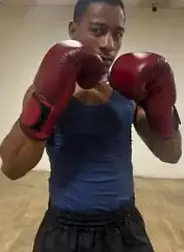
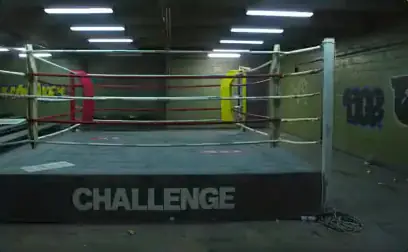
Kling AI's official Flash sample: two fighters and a gym went in as references. The contact sheet holds eight frames from that one generation — click one to circle it.
Flash covers the three starting points you reach for while exploring. End frames, multi-keyframes and video editing stay with Kling 4.0.
Describe the subject, the action, the camera and the light, and get a 3–20 second draft back.
Lock the opening composition with one image and let Flash animate the scene from there.
Combine character, product and location references so even the first drafts look like your project.
Kling AI hasn't published Flash's reference limits, audio support or aspect ratios yet; this page lists only what the official specification states.
Flash is where ideas are cheap to try. Kling 4.0 is where the keeper becomes the final take — longer, sharper and fully directed. Same family, same API, one model name apart.
Fire off variations of one idea — angles, actions, moods — at 720p, while they're still cheap to throw away.
Pick the take that works and lock down what made it work: the prompt, the first frame, the references.
Re-render it on Kling 4.0: up to 30 seconds at 1080p, first and last frames, keyframes and stereo sound.
Anywhere you need volume and speed before polish.
Turn a shot list into moving boards in minutes, so the team reacts to motion instead of stills.
Spin hooks, openings and formats for short-form channels, and keep the ones that hold attention.
Rough out several creative routes for one product before committing budget to the final render.
Block a scene in 20-second drafts, then rebuild the approved version as one 30-second Kling 4.0 take.
Kling AI's published specifications for both models. Where Flash has no published value, the cell is marked —.
| Capability | Kling 4.0 | Kling 4.0 Flash |
|---|---|---|
| Text-to-video | Yes | Yes |
| Image-to-video (first frame) | Yes | Yes |
| First & last frame | Yes | — |
| Multi-keyframes | Up to 10 keyframe images | — |
| Omni Reference | Yes | Yes |
| Video editing | Coming soon on APIPod | — |
| Duration | 3–30 s | 3–20 s |
| Resolution | 720p / 1080p | 720p |
| Dynamic range | 10-bit HDR announced (not on APIPod yet)Coming soon | 8-bit SDR |
| Aspect ratio | 21:9 / 16:9 / 1:1 / 9:16 / Auto | — |
| Audio | Two-channel stereo | — |
| Prompt length | Up to 8,000 tokens | — |
| Reference inputs | 10 images · 5 videos · 7 elements · 15 total | — |
| Video extension | Repeated, up to 2 minutesComing soon | — |
— = not listed in Kling AI's official Kling 4.0 Flash specification. Source: Kling AI release notes, October 2026.
Once live, Flash will share Kling 4.0's async endpoint, so moving a draft to the final render is a one-word change. Submit drafts in parallel and collect them together.
curl https://api.apipod.ai/v1/videos/generations \
  -H "Authorization: Bearer $API_KEY" \
  -H "Content-Type: application/json" \
  -d '{
    "model": "kling-4.0-flash",
    "prompt": "Two boxers trade jabs in a basement gym, handheld, fluorescent light",
    "duration": 10,
    "aspect_ratio": "16:9"
  }'

# {"code":200,"data":{"task_id":"<task_id>","status":"pending"}}
Preview: Kling 4.0 Flash isn't live on APIPod yet. This request follows the unified video schema; the API docs will be final at launch.
Kling 4.0 Flash is the lighter, faster model in Kling AI's Kling 4.0 family, built on Kling 4.0 with a subset of its capabilities. It is designed for frequent creation: fast generation at better value, for drafting and iterating on video ideas.
Not yet. Kling 4.0 is live on APIPod today, and Kling 4.0 Flash is being integrated now; at launch you set model to kling-4.0-flash. Until then, draft on Kling 4.0 or Kling 3.0 Turbo (3–15 seconds, 1080p, audio on every clip), or contact us to be notified at launch.
Flash generates 3 to 20 seconds at 720p in 8-bit SDR, from text, a first frame or Omni Reference. Kling 4.0 goes up to 30 seconds at 1080p and adds first and last frames, up to 10 keyframes, voices and two-channel stereo audio; its video editing is coming to APIPod soon.
3 to 20 seconds per generation.
720p in 8-bit SDR. For 1080p, render the final version on Kling 4.0.
Text-to-video, image-to-video from a first frame, and Omni Reference with mixed references.
No. End frames and multi-keyframe control are Kling 4.0 features; the official Flash specification lists first-frame image-to-video only.
Kling AI's official Flash specification does not list audio support or reference limits yet. If you need stereo sound and lip sync, use Kling 4.0.
Explore on Flash: generate many short 720p variations of an idea. Pick the one that works, keep its prompt, first frame and references, and re-render it on Kling 4.0 at full length and resolution.
Send POST /v1/videos/generations with model set to kling-4.0-flash, then poll GET /v1/videos/status/{task_id} or pass a callback_url. Changing the model to kling-4.0-t2v sends the same request to the full model, which is already live.
Explore on Flash, circle the keeper, finish it on Kling 4.0.